

Most Nepal businesses spend significant time on visual branding—logos, colors, and fonts—but almost no time defining their brand voice. Yet the words you use, the tone you adopt, and the way you communicate are just as important as how you look.
Your brand voice is how your business sounds across every written touchpoint: your website, social media, ads, emails, and customer service.
This guide walks you through developing a brand voice that feels genuinely Nepali, builds trust, and differentiates you from competitors.
What Is Brand Voice?
Brand voice is the consistent personality and emotion infused into all of your company’s communications. It’s not what you say, but how you say it.
Brand Voice Examples for Nepal Businesses
Your Nepal business might have a brand voice that is warm, direct, and expert (professional services); energetic, youthful, and optimistic (lifestyle brands); authoritative, clear, and reassuring (healthcare, finance); or playful, friendly, and conversational (food, entertainment).
The 4 Elements of a Strong Nepal Brand Voice
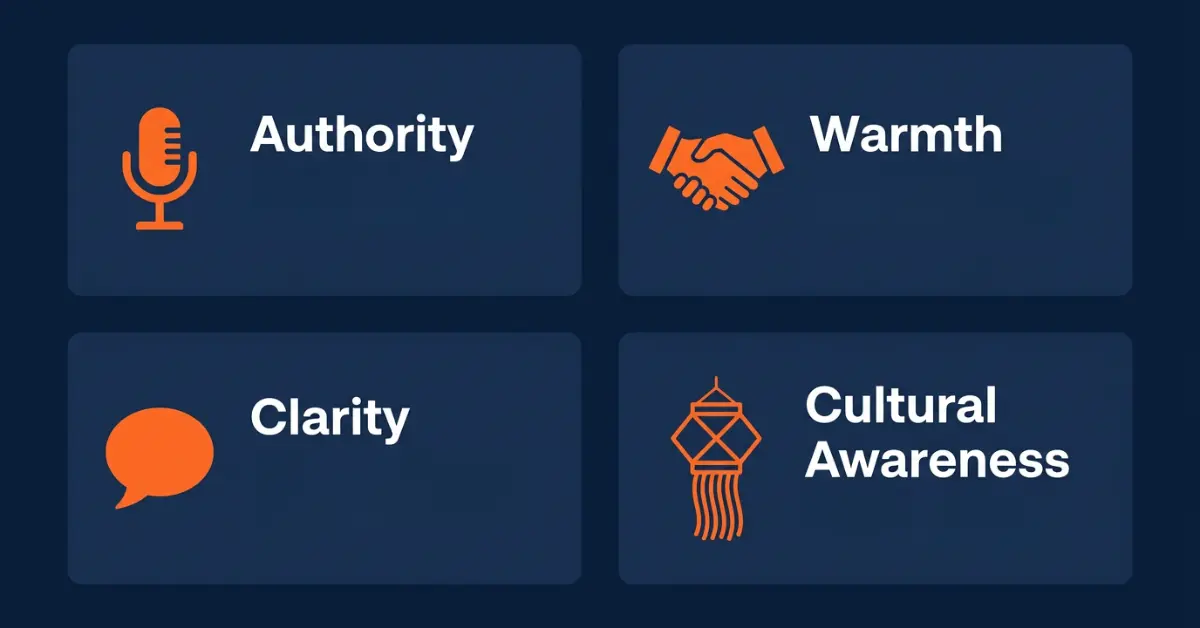
1. Authority Without Arrogance
Trust is earned by businesses that know their field and communicate with confidence. Your brand voice should demonstrate expertise without condescension.
Good authority: “Here’s what we’ve learned from working with 200 Nepal businesses…”
Bad authority: “Obviously, any competent business would know…”
2. Warmth Without Excessive Familiarity
In the Nepali business context, where relationships and personal trust carry more weight than transactions, warmth in your brand voice builds connection.
But excessive informality can undermine professionalism, particularly for service businesses where customers need to trust your expertise.
Good warmth: “We’re here to help you succeed.”
Bad warmth: “Hey buddy, let’s smash your goals together!”
3. Clarity Without Oversimplification
Nothing erodes customer trust in Nepal faster than language that sounds impressive but means nothing. Corporate jargon, buzzwords, and unnecessarily complex terminology make customers suspicious.
Write in clear, direct language. If you can say something in five words instead of ten, do it.
Good clarity: “We help Nepali businesses grow online.”
Bad clarity: “We leverage synergistic digital ecosystems to facilitate omnichannel growth optimization.”
4. Cultural Awareness Without Stereotyping
A genuinely Nepali brand voice reflects cultural awareness—referencing festivals, acknowledging local context, and using Nepali phrases naturally when appropriate.
But avoid stereotyping or performative cultural references that feel forced.
Good cultural awareness: “Whether you’re celebrating Dashain with family or closing your books for the fiscal year, we’re here to support your business.”
Bad cultural awareness: Overusing Namaste in every sentence or forcing unnecessary Nepali words where English would be clearer.
How to Define Your Nepal Business Brand Voice
Step 1: List 3-5 Personality Traits
If your business were a person, how would you describe their personality? Choose 3 to 5 adjectives that feel authentic to your business.
Examples: Professional, approachable, innovative. Energetic, youthful, inclusive. Authoritative, clear, reassuring.
Step 2: Write “Sounds Like / Does Not Sound Like” Examples
For each personality trait, write examples of what that sounds like in practice—and what it doesn’t sound like.
Example for “Approachable”:
Sounds like “Have a question? We’re happy to help.”
It does not sound like “Submit queries via our formal inquiry portal for processing within 5-7 business days.”
Step 3: Test It Across Channels
Write sample social media posts, website copy, and email subject lines using your defined voice. Does it feel consistent? Does it sound like the same business across all channels?
Step 4: Document It
Create a simple brand voice guide—one page is enough. Include your personality traits, do/don’t examples, and common phrases your brand uses or avoids.
Share this with everyone who writes for your business: social media managers, customer service, and content writers.
Common Brand Voice Mistakes Nepal Businesses Make
Mistake 1: Copying Competitor Voice
If every business in your category sounds the same, differentiation becomes impossible. Study competitors to understand category norms, then deliberately choose a different voice.
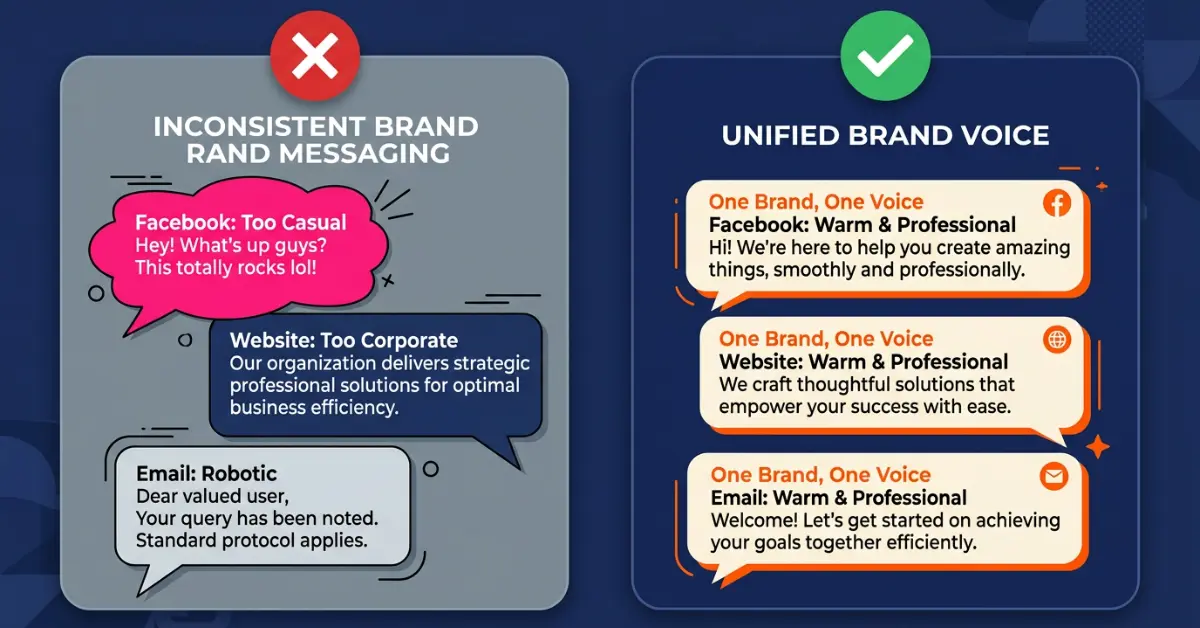
Mistake 2: Inconsistency Across Channels
Your Facebook sounds casual, your website sounds corporate, and your emails sound robotic. This confuses customers and weakens brand recognition.
One brand, one voice, everywhere.
Mistake 3: Changing Voice Based on Who’s Writing
Different team members write differently. Without guidelines, your brand voice will shift depending on who’s posting that day.
Document your voice and train everyone who writes for your business.
Brand Voice Development at Tech Babal
Our branding service includes brand voice development as a core component of every brand identity project. We help you define, document, and apply your brand voice across all customer touchpoints.
Learn more: techbabal.com/services/branding-rebranding