
You’ve probably heard “360 digital marketing” thrown around in business conversations. Maybe someone suggested it for your company. The term sounds expensive and complicated.
Here’s what it actually means: running coordinated campaigns across multiple digital channels instead of betting everything on one platform. Your SEO, social media, paid ads, email, content, and website all work together toward the same business goal.
The Single-Channel Problem
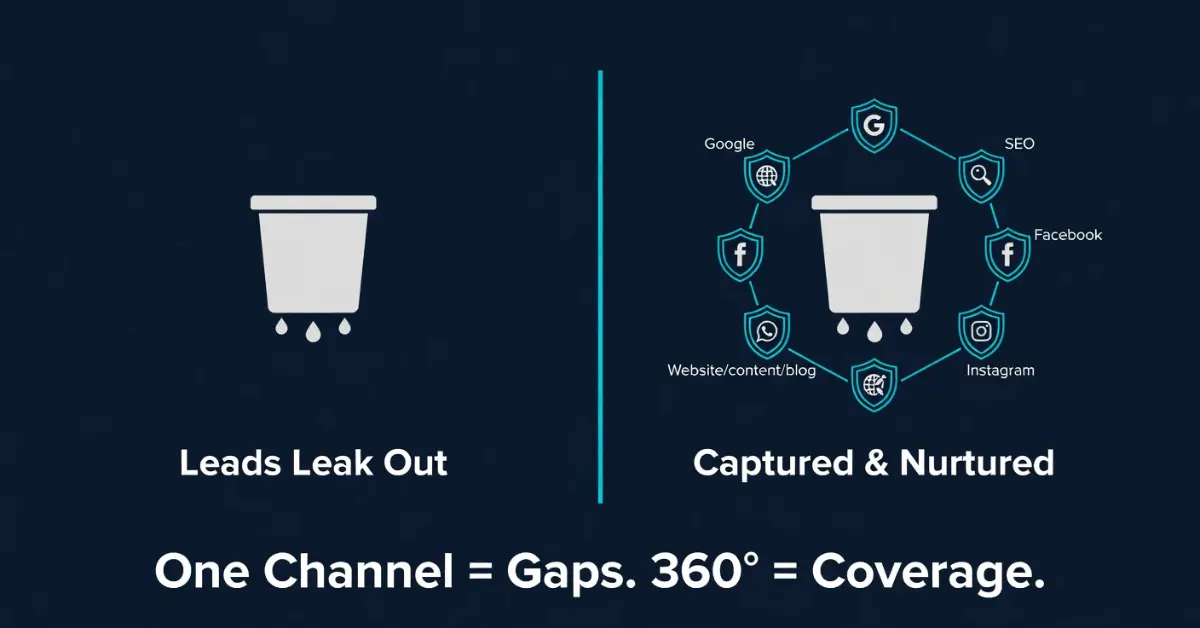
Most Nepali businesses I talk to are active on one or two channels. They post on Facebook. Or they run Google Ads. Or they built a website two years ago that nobody touches anymore.
Each of these activities helps. But relying on just one creates gaps in your customer reach.
Think about it: A business that only runs Facebook ads reaches people browsing Facebook at exactly the right moment. That’s it. What about the potential customer who searches “accounting firm Kathmandu” on Google? What about the person who visits your website from a referral, doesn’t find what they need, and leaves? What about your previous customer who hasn’t heard from you in months?
Single-channel marketing creates blind spots. 360 marketing fills them.
The Six Channels Explained
1. Search Engine Optimization (SEO)
SEO gets your website showing up when people search for your services on Google. It’s the only channel that generates traffic without paying for every visitor. For Nepal businesses, local SEO works particularly well—appearing in Google Maps when someone searches “restaurant Thamel” or “dentist Lalitpur” drives high-intent customers.
2. Social Media Marketing
Facebook, Instagram, LinkedIn, and TikTok let you build brand presence where Nepalis already spend their time. In Nepal, where word-of-mouth matters and people check your Facebook page before calling, consistent social media isn’t optional—it’s table stakes.
3. Paid Advertising
Google Ads and Meta Ads put you in front of exactly the audience you define by location, age, interests, and behavior. Paid ads work fast while organic channels build momentum. Nepal’s cost-per-click remains relatively low, making paid advertising accessible for mid-size businesses.
4. Content Marketing
Blog posts, videos, guides. Content answers customer questions, builds authority, and feeds your SEO and social channels. Without content, you’re just posting promotions.
5. Website and Conversion Optimization
Your website is where all other channels point. If it’s slow, unclear, or outdated, you’re losing the leads generated by everything else. Speed, clarity, mobile experience, and conversion rate need ongoing attention.
6. Email and Messaging
WhatsApp and email remain among the highest-converting channels in Nepal. Staying in regular contact with prospects and customers turns one-time buyers into repeat clients.
How It Works in Practice
Here’s a real example from a Kathmandu business:
- A potential customer sees your Instagram Reel.
- They Google your business name.
- SEO ensures they find your website, not a competitor’s.
- They read a blog post that answers their exact question.
- Content marketing builds trust.
- They fill out your inquiry form.
- Your website made this easy.
- You follow up via WhatsApp within two hours.
- Messaging closes the sale.
- Three months later, your newsletter reminds them about a new service.
- They book again.
Remove any one channel and you lose that customer somewhere along the path.
Is This Only for Large Companies?
No. Mid-size Nepal businesses actually benefit more from coordinated marketing than large corporations do.
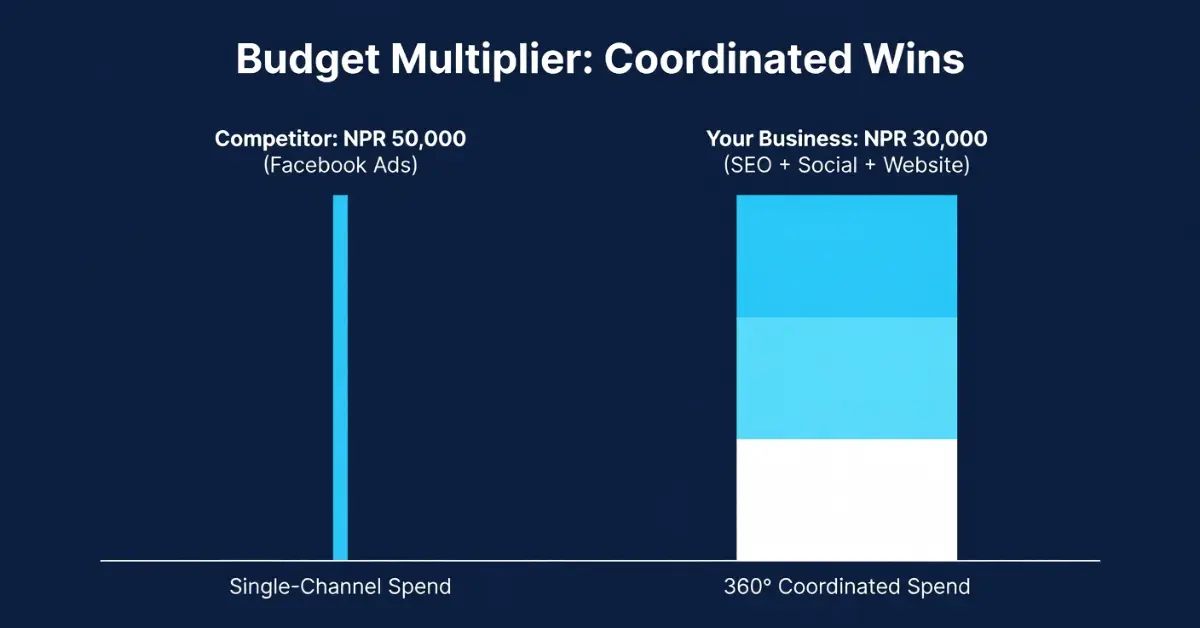
Large companies can afford to flood each individual channel. They can spend NPR 500,000 per month on Facebook alone. Mid-size businesses need the multiplier effect—where each channel reinforces the others—because you’re working with a tighter budget.
A Kathmandu business with NPR 30,000 per month in marketing budget will consistently outperform a competitor spending NPR 50,000 on Facebook alone if that NPR 30,000 is coordinated across SEO, social, and website optimization.
Want 360 Digital Marketing for Your Business?
Book a free 30-minute strategy session. No pitch—just clarity. Visit: techbabal.com/contact , See pricing: techbabal.com/pricing.